Basketball Diet Plan: Fuel Your Game for Peak Performance
Basketball Diet Plan: Fuel Your Game for Peak Performance

Basketball is a fast-paced, high-energy sport that demands explosive speed, vertical leaps, and endurance over four quarters. While regular practice and strength training are essential, nutrition is often the missing piece that can take your game to the next level.
This guide covers the best diet for basketball players, including essential nutrients, meal-timing strategies, hydration tips, and a sample meal plan to boost performance, support muscle growth, and speed recovery.
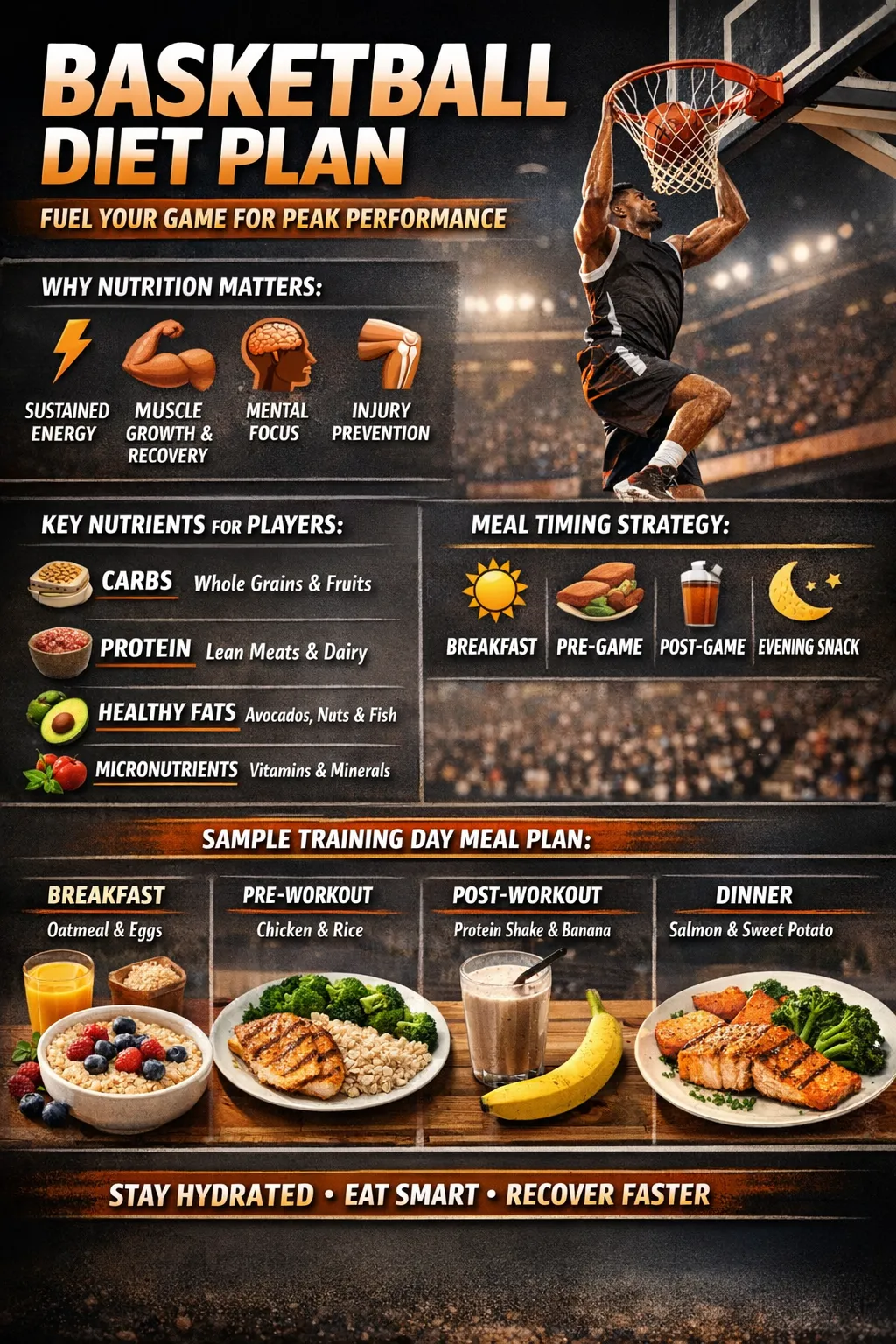
Why Diet Matters in Basketball
Proper nutrition affects your game in multiple ways:
Sustained Energy: Fast breaks, defensive slides, and repeated sprints all rely on carbohydrate-fueled energy.
Muscle Growth & Recovery: Protein helps repair muscles stressed during intense workouts and games.
Mental Focus: Balanced meals stabilize blood sugar, preventing mid-game energy crashes.
Injury Prevention: Vitamins, minerals, and healthy fats reduce inflammation and support joint health.
Key Nutrients for Basketball Players
1. Carbohydrates: Your Primary Fuel
Role: Provide quick and long-lasting energy for bursts of speed and repeated jumps.
Sources: Whole grains (brown rice, oats), starchy vegetables (sweet potatoes), fruits (bananas, apples), legumes (beans, lentils).
Daily Target: 5–8 g per kg of body weight, adjusted for training intensity.
2. Protein: Repair & Build Muscle
Role: Supports muscle repair and growth after high-impact drills.
Sources: Lean meats (chicken, turkey), fish (salmon, tuna), dairy (Greek yogurt, low-fat milk), plant-based proteins (tofu, beans).
Daily Target: 1.2–2.0 g per kg of body weight depending on training load.
3. Healthy Fats: Hormonal & Joint Support
Role: Aid hormone production (including testosterone) and vitamin absorption for muscle recovery.
Sources: Avocados, nuts (almonds, walnuts), seeds (chia, flax), olive oil, fatty fish (mackerel, salmon).
Daily Target: 20–30% of total calories from unsaturated fats.
4. Micronutrients & Fiber
Role: Support immunity, bone strength, and muscle function. Fiber aids digestion and stabilizes blood sugar.
Sources: Colorful fruits and vegetables (spinach, peppers, berries), whole grains, nuts, seeds.
Daily Target: 25–35 g of fiber per day, depending on body weight and gender.
Meal Timing & Structure
Breakfast (Within 1 Hour of Waking)
Why: Restores blood sugar and kick-starts metabolism.
Focus: Complex carbs + moderate protein + healthy fats.
Example: Oatmeal with berries and almond butter, scrambled eggs, or a protein shake.
Pre-Workout / Pre-Game (2–3 Hours Before)
Why: Fuels muscles for intense activity.
Focus: Carbohydrate-rich meal with moderate protein.
Example: Grilled chicken, brown rice, and steamed vegetables.
Post-Workout / Post-Game (Within 30–60 Minutes)
Why: Replenishes glycogen and jump-starts muscle repair.
Focus: Fast-digesting carbs + quality protein.
Example: Protein shake with a banana or Greek yogurt topped with fruit.
Dinner / Evening Meal
Why: Supports overnight recovery and muscle growth.
Focus: Lean protein + complex carbs + healthy fats.
Example: Salmon, sweet potato, and roasted vegetables drizzled with olive oil.
Bedtime Snack (Optional)
Why: Maintains muscle protein synthesis for early morning training.
Example: Cottage cheese with pineapple or high-protein cereal with low-fat milk.
Sample Meal Plan for a Training Day (2,800–3,200 Calories)
Morning (7:00 AM)
Oatmeal with berries + 1 tbsp nut butter
3 egg whites + 1 whole egg scrambled
1 cup low-fat milk or orange juice
Mid-Morning Snack (10:00 AM)
Greek yogurt with honey
1 piece of fruit (banana or apple)
Lunch (12:30 PM)
Grilled chicken breast (6–8 oz)
1 cup brown rice
Mixed green salad with olive oil & vinegar
Pre-Workout Snack (3:00 PM)
Whole-grain wrap with turkey and avocado
Handful of grapes
Post-Workout (5:00 PM)
Protein shake (20–30 g protein)
Banana or small bowl of mixed berries
Dinner (7:00 PM)
Lean steak or salmon (6–8 oz)
Baked sweet potato
Steamed broccoli or zucchini
Evening Snack (9:30 PM)
Cottage cheese with pineapple
Herbal tea
Hydration Essentials
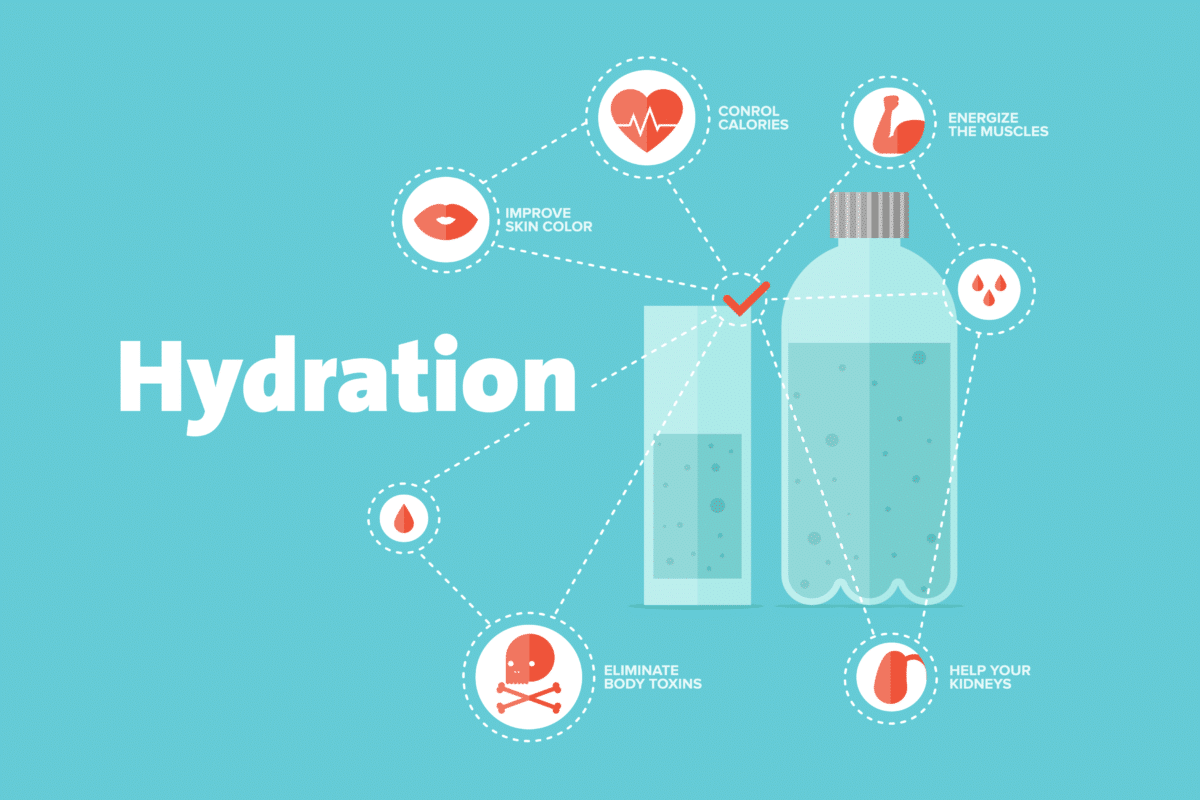
Daily Intake: 2–3 liters of water
Before Workout: 16–20 oz of water or low-sugar sports drink ~2 hours prior
During Workout: 7–10 oz every 10–20 minutes
After Workout: 16–24 oz per pound lost (weigh yourself before & after)
💡 Tip: For long practices or hot conditions, use electrolyte-rich drinks to replace sodium, potassium, and magnesium.
Additional Tips for Maximum Gains
Strength Training: Focus on compound lifts (squats, deadlifts, bench press) to boost power and prevent injuries.
Recovery: Get 7–9 hours of sleep, stretch or foam-roll after workouts, and schedule rest days.
Limit Junk Food: Processed or sugary foods can cause energy crashes; enjoy occasionally.
Personalize Your Diet: Track weight, energy, and performance to fine-tune portion sizes.
Conclusion
Basketball demands explosive speed, endurance, and rapid recovery, all of which hinge on a balanced diet. Prioritize carbohydrates for energy, lean proteins for muscle repair, healthy fats for hormones, and stay hydrated to dominate the court.
Tailor your nutrition plan to your body and goals, and consider consulting a sports nutritionist for a personalized approach. Stay consistent, fuel smart, and watch your on-court performance soar!